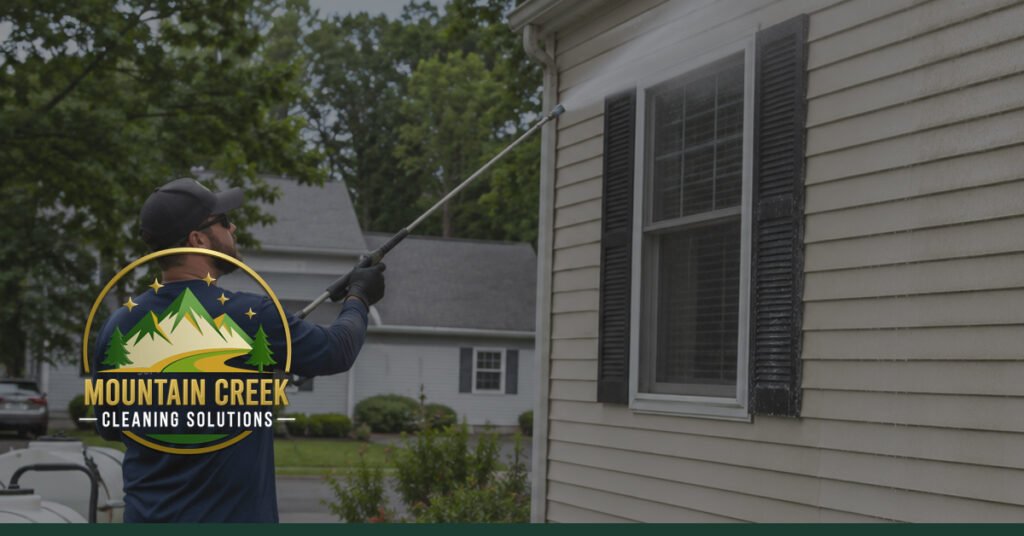
When it comes to cleaning the exterior of your home, many Vermont homeowners use the terms “pressure washing” and “soft washing” interchangeably. While both methods are designed to remove dirt, grime, algae, and stains, they actually use very different cleaning approaches – and choosing the wrong one can potentially damage your home.
At Mountain Creek Cleaning Solutions, we believe homeowners should understand the difference between soft washing and pressure washing so they can make informed decisions about protecting their property.
In many cases, soft washing is the safest and most effective solution for cleaning your home’s exterior.
What is Pressure Washing?
Pressure washing uses highly pressurized water to blast away dirt, grime, mud, stains, and buildup from surfaces. Depending on the equipment being used, pressure washing systems can operate anywhere from roughly 1,300 to 4,000 PSI (pounds per square inch).
Pressure washing works extremely well on:
- Concrete driveways
- Sidewalks
- Stone patios
- Brick surfaces
- Heavy-duty hardscapes
Because of the intense force involved, pressure washing is ideal for durable materials that can withstand aggressive cleaning.
However, that same pressure can also create problems on more delicate surfaces.
What is Soft Washing?
Soft washing acts more like a deep, gentle shower for your home.
Instead of relying on raw force, soft washing uses low-pressure water combined with specialized detergents and cleaning solutions that break down dirt, kill mold spores, eliminate algae, and remove organic growth at the source.
Soft washing is commonly used for:
- Vinyl siding
- Painted wood
- Cedar shake siding
- Roof shingles
- Stucco
- Window surrounds
- Fencing
- Delicate exterior surfaces
Rather than blasting contaminants away, the cleaning solutions are allowed to dwell on the surface and do the heavy lifting.
This approach helps clean thoroughly while minimizing the risk of damage.
The Biggest Difference: Force vs. Chemistry
The simplest way to understand the difference is this:
- Pressure washing cleans with force
- Soft washing cleans with specialized detergents and low pressure
Pressure washing relies heavily on water pressure to remove buildup. Soft washing relies on cleaning agents that safely break down grime, mildew, algae, bacteria, and mold.
That distinction is important because many of the stains commonly seen on Vermont homes – especially green algae, mildew, moss, and black streaking – are organic growths that need to be treated at the root, not just rinsed off the surface.
Why Soft Washing Is Often Recommended for Homes
For most residential siding and roofing materials, soft washing is generally considered the safer and more effective option.
It Helps Prevent Damage
Using excessive pressure on siding or roofing can lead to:
- Stripped paint
- Cracked vinyl panels
- Damaged window seals
- Water forced behind siding
- Damaged shingles
- Etching on softer materials
Industry experts regularly caution against using high-pressure washing on delicate home exteriors because it can create expensive long-term damage.
Soft washing uses far lower pressure, making it much safer for your home’s exterior surfaces.
Soft Washing Kills Mold & Algae at the Source
Pressure washing may remove visible surface buildup temporarily, but it does not always eliminate the spores and root systems underneath.
Soft washing solutions are specifically designed to:
- Kill mold spores
- Eliminate algae
- Remove mildew
- Prevent regrowth
Because the biological growth is treated at the source, soft washing often produces longer-lasting results than pressure washing alone.
This is especially important in Vermont’s damp climate, where shaded homes frequently deal with recurring algae and mildew growth.
It Uses Less Pressure & Less Risk
Many homeowners are surprised to learn that pressure washers can actually force water into places it should never go. Improper pressure washing can push water:
- Behind siding
- Into insulation
- Around windows
- Under roofing materials
Soft washing dramatically reduces this risk because it uses much lower pressure levels.
Better for Delicate Vermont Homes
Many homes throughout Vermont feature:
- Older wood siding
- Painted clapboard
- Cedar shingles
- Historic materials
- Weathered exterior surfaces
These materials often require a gentler approach to avoid damage. Soft washing allows homeowners to clean and restore their home’s appearance without unnecessarily stressing aging materials.
When Is Pressure Washing the Better Choice?
Pressure washing still absolutely has its place. For hard, durable surfaces, higher-pressure cleaning can be extremely effective. Pressure washing is often ideal for:
- Concrete driveways
- Sidewalks
- Stone walkways
- Garage floors
- Retaining walls
- Certain patios
These surfaces can typically handle the stronger cleaning force safely.
In many exterior cleaning projects, professionals actually use both methods strategically depending on the surface being cleaned.
Vermont Weather Makes Exterior Cleaning Especially Important
Vermont’s climate creates the perfect conditions for exterior buildup. Homes here frequently experience:
- Moisture buildup
- Algae growth
- Moss
- Mold and mildew
- Pollen
- Mud season residue
- Salt and winter grime
Regular exterior cleaning not only improves curb appeal – it can also help protect siding, roofing, and other exterior materials from long-term deterioration.
Why Professional Soft Washing Matters
Soft washing may sound simple, but using the wrong cleaning solutions, improper dilution ratios, or poor application techniques can still damage surfaces or landscaping.
Professional exterior cleaning companies understand:
- Proper pressure levels
- Safe cleaning agents
- Surface-specific techniques
- Plant and landscaping protection
- Vermont-specific exterior cleaning challenges
At Mountain Creek Cleaning Solutions, we use safe, professional cleaning methods tailored to your property’s surfaces and condition. Whether your home needs gentle soft washing for siding and roofing or targeted pressure washing for concrete and hardscapes, our team can help restore your property safely and effectively.
Schedule Exterior Cleaning Services in Vermont
If your home’s exterior is showing signs of algae, mildew, dirt, or weather staining, choosing the right cleaning method can make all the difference in protecting your investment.
Soft washing offers a safer, longer-lasting solution for many Vermont homes, while pressure washing remains an effective option for tougher hard surfaces.
To learn more about professional exterior cleaning services, contact Mountain Creek Cleaning Solutions today for a personalized estimate.