
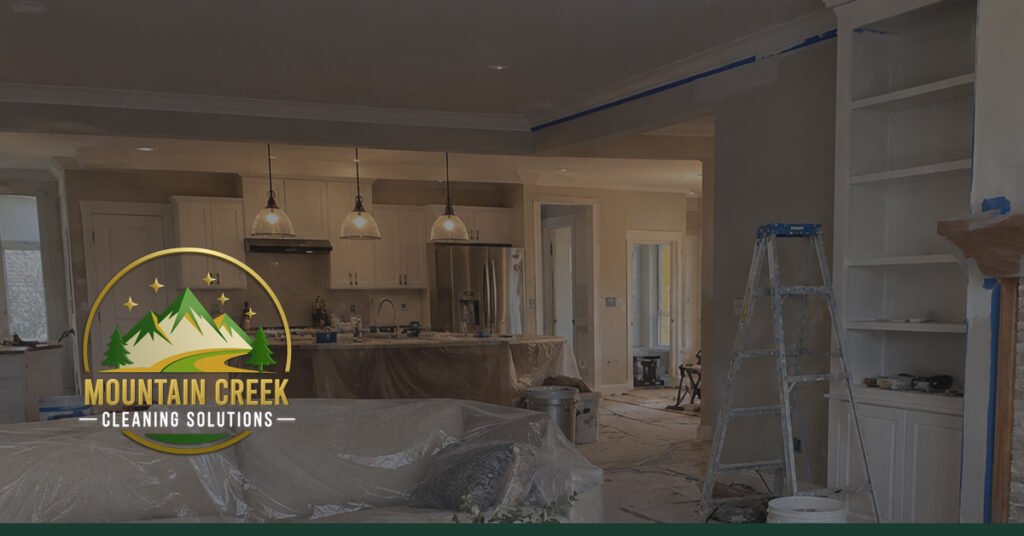
The renovation is finally finished. The tools are packed up, the contractors have left, and the large pieces of debris are gone. You vacuum the floors, wipe down the counters, and assume the cleaning is almost over.
Then, a day or two later, you notice it: another thin layer of dust on the windowsills, cabinets, floors, and fixtures.
Construction dust has a frustrating tendency to keep showing up long after a renovation appears complete. That’s because the dust created by activities like sanding drywall, cutting wood, drilling, demolition, installing flooring, and working with tile can be extremely fine. Instead of simply dropping to the floor, particles can travel throughout a property, settle into overlooked spaces, become airborne again, and eventually land on surfaces that were already cleaned.
For Vermont homeowners and property managers, getting a newly renovated space truly clean often requires much more than a quick vacuum and wipe-down.
Here’s why construction dust can be so difficult to eliminate – and how professional post-construction cleaning from Mountain Creek Cleaning Solutions can help.
Construction Dust Is Different From Everyday Household Dust
Normal household dust typically builds up gradually from things like fabric fibers, dirt, pet hair, and other everyday particles.
Construction and renovation projects can generate a much more concentrated mixture of fine particles from materials such as:
- Drywall and joint compound
- Wood and sawdust
- Concrete and masonry
- Tile and grout
- Paint and finishing materials
- Flooring materials
- Insulation
- Dirt and debris disturbed during demolition
Sanding, sawing, drilling, cutting, and demolition can send these particles into the air, where the smallest ones may remain suspended rather than immediately settling onto the floor.
That means removing the pile of drywall scraps in the corner doesn’t necessarily remove the mess created by the drywall work.
Much of the remaining cleanup is far less obvious.
Fine Dust Can Travel Far Beyond the Renovation Area
One of the most surprising things about construction dust is how far it can spread.
You may renovate a kitchen only to discover dust in the hallway, living room, bedrooms, or other nearby areas.
Fine particles can move through a property as:
- People walk in and out of the work area
- Doors open and close
- Tools and materials are carried between rooms
- Air moves naturally throughout the building
- Heating or cooling systems operate
- Dust-covered clothing or equipment travels through the property
Dust can migrate well beyond the room where work actually took place, including into cabinets, closets, vents, and adjoining living areas.
This is why cleaning only the renovated room may not completely solve the problem.
Where Does Construction Dust Hide?
Some renovation dust is obvious. You’ll see it sitting on a floor or covering a countertop.
The more difficult dust is often found in places that are easy to overlook during everyday cleaning.
Window Sills and Window Frames
Window sills provide the perfect horizontal surface for airborne particles to settle.
Dust can also collect along window frames, tracks, trim, and corners. Because these areas may sit above eye level or behind blinds and curtains, buildup can easily go unnoticed during an initial cleanup.
Baseboards and Trim
Fine dust settles along the tops and edges of baseboards, molding, door frames, and other trim.
Even if you’ve vacuumed the room several times, dust sitting on these surfaces can later be disturbed and make its way back onto freshly cleaned floors.
Cabinets and Shelving
New cabinetry may look pristine from a distance, but dust can collect:
- On cabinet tops
- Inside shelves
- Around hinges
- Along door edges
- In drawers
- In corners
- On cabinet faces
Fine particles can even enter closed cabinets through small gaps during construction.
For kitchen renovations in particular, properly detailing cabinetry is an important part of making the completed room truly feel ready to use.
Light Fixtures and Ceiling Fans
Dust does not only settle downward onto floors and countertops.
Light fixtures, ceiling fans, recessed lighting areas, and other overhead surfaces can accumulate substantial amounts of fine construction residue.
If these higher surfaces aren’t cleaned first, dust can fall onto everything below them afterward.
Air Vents
Vent covers and registers are another common place for renovation dust to collect.
Air movement can carry lightweight particles toward vents and throughout different areas of a building. Research on post-renovation dust also notes that heating and cooling systems can contribute to the movement and redistribution of particles if dust enters the system.
Cleaning visible vents and surrounding surfaces is therefore an important part of a thorough post-construction clean.
Fixtures and Hardware
Faucets, handles, hinges, switches, hardware, and bathroom fixtures can all develop a fine coating of construction dust.
Because these surfaces often involve small edges, grooves, and irregular shapes, simply wiping the most visible portion may leave residue behind.
Floors
Floors are usually the first place people notice construction dust – and often the first place they clean.
Unfortunately, they can also be one of the first places dust returns.
If fine particles remain on ceilings, fixtures, window trim, cabinets, or other elevated surfaces, cleaning the floor first may only mean cleaning it again later.
Professional post-construction cleaning commonly follows a systematic approach so higher surfaces are addressed before the final floor cleaning, helping reduce repeated settling.
Why Does Construction Dust Keep Coming Back After You Clean?
You cleaned yesterday. So why is there another layer of dust today?
In many cases, the dust isn’t actually new.
It simply wasn’t on the surface yet.
Fine particles can remain airborne and gradually settle over time. Everyday movement through the space can also disturb dust sitting on ledges, trim, furniture, cabinetry, and other surfaces, sending it back into the air before it settles somewhere else.
Think of it as a cycle:
Dust becomes airborne, dust settles, activity disturbs the dust, dust becomes airborne again, dust settles somewhere else.
Until the particles are systematically removed from the surfaces where they’re collecting, you can find yourself wiping down the same countertops and vacuuming the same floors repeatedly.
Why a Quick Vacuum and Wipe-Down May Not Be Enough
Standard household cleaning is designed for normal day-to-day dirt and dust.
Post-construction cleaning presents a different challenge.
If you concentrate only on obvious areas – such as floors and countertops – you can leave significant amounts of dust behind on:
- Ceiling fans
- Light fixtures
- Vents
- Window frames
- Baseboards
- Trim
- Cabinet interiors
- Cabinet tops
- Doors
- Shelving
- Appliances
- Corners and crevices
Even cleaning techniques matter. Moving dust from one surface to another doesn’t eliminate it, and cleaning lower surfaces before upper ones can create unnecessary repeat work.
The goal of a thorough post-construction clean is not simply to make the most visible surfaces look clean. It is to methodically work through the property and address the places where construction dust is likely to have settled.
Construction Dust Can Make a Finished Renovation Feel Unfinished
You may have just invested significant time and money into new floors, freshly painted walls, beautiful cabinetry, upgraded fixtures, or an entirely remodeled space.
A lingering coating of dust can prevent you from enjoying the finished result.
Floors may feel gritty underfoot. Glass and fixtures can look cloudy. Dark cabinets can show every speck. Freshly installed surfaces may appear dull instead of new.
That’s one reason post-construction cleaning should be viewed as part of completing the renovation – not simply something that happens afterward.
Once the leftover dust, debris, smudges, and construction residue are gone, the details of the finished project can finally stand out.
How Mountain Creek Cleaning Solutions Tackles Post-Construction Cleaning
At Mountain Creek Cleaning Solutions, we understand that construction cleanup involves more than taking out debris and running a vacuum over the floors.
Our post-construction cleaning services are organized into rough, detailed, and final cleaning stages, allowing us to address the different types of mess that remain throughout the end of a construction or renovation project.
Rough Cleaning
The rough clean focuses on the larger mess left behind by construction.
This stage may include:
- Removing large debris, trash, and leftover construction materials
- Sweeping and vacuuming floors
- Performing an initial cleaning of walls, windows, and surfaces
- Removing heavier layers of dust and dirt
Getting the larger debris out of the way creates a better foundation for the more detailed cleaning that follows.
Detailed Cleaning
This is where many of the hidden areas affected by construction dust receive closer attention.
Mountain Creek’s detailed post-construction cleaning can include:
- Baseboards
- Window sills
- Fixtures
- Cabinetry
- Kitchens and bathrooms
- Air vents
- Light fixtures
- Ceiling fans
- Ceilings
- Floors
- Tile and other finishes
This stage is especially important because these are many of the same surfaces where fine construction particles tend to collect after renovation work.
Final Cleaning and Touch-Ups
Even after a thorough cleaning, a final walkthrough provides an opportunity to spot anything that still needs attention.
Mountain Creek’s final cleaning stage includes identifying overlooked areas, addressing lingering fine dust, and removing smudges and fingerprints so the space is truly ready for occupancy or presentation.
This staged approach is particularly valuable with construction dust because the goal isn’t simply to remove what is immediately visible. It’s to work through the property systematically until the renovation looks – and feels – complete.
When Should You Schedule Post-Construction Cleaning?
Whenever possible, think about post-construction cleaning before the final day of your renovation.
The ideal timing depends on the project, but cleaning is generally most effective once the dustiest construction work has been completed and contractor traffic is winding down.
If workers are still sanding drywall, cutting materials, installing cabinets, or completing other dust-producing tasks, newly cleaned areas may quickly become dusty again.
For larger projects, cleaning can also occur in stages as construction progresses, followed by detailed and final cleaning closer to occupancy.
Mountain Creek Cleaning Solutions evaluates each project individually and provides a custom scope of work based on the size and condition of the property.
Enjoy Your Renovation Without Fighting the Dust
After weeks or months of construction, the last thing most homeowners want to do is spend days repeatedly wiping cabinets, cleaning baseboards, vacuuming floors, and wondering why another layer of dust appeared overnight.
Professional post-construction cleaning can help bridge the gap between “the renovation is done” and “the space is actually ready to enjoy.”
Mountain Creek Cleaning Solutions provides professional post-construction cleaning throughout Chittenden and Addison Counties and surrounding Vermont communities, helping homeowners, contractors, property managers, and businesses remove the dust, debris, and residue left behind after construction.
If your newly renovated space still feels like a construction zone because fine dust keeps showing up, contact Mountain Creek Cleaning Solutions today to request an estimate for professional post-construction cleaning in Vermont.